WFP Yemen Food Security Update, August 2025

- 2025-08-25
- 12:33:55


Key Highlights
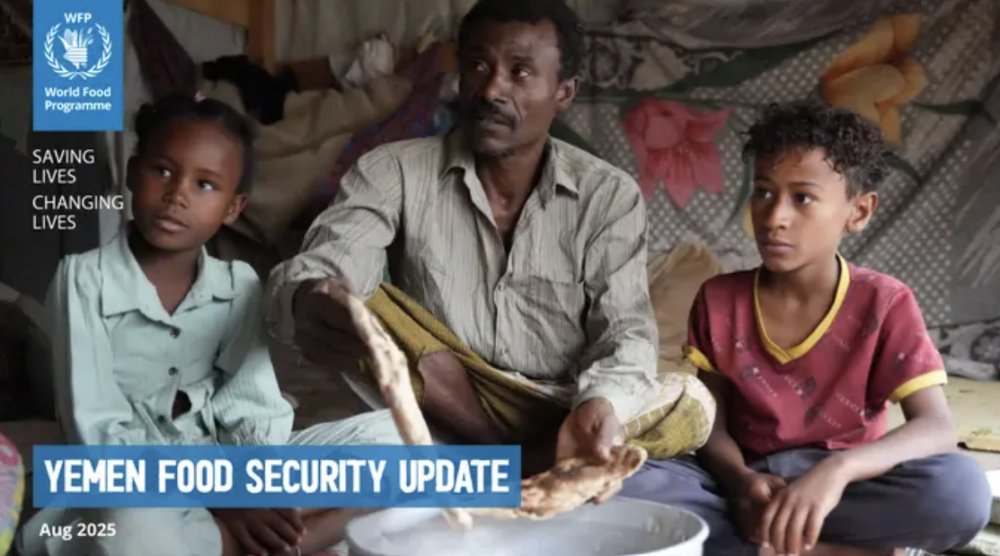
In July 2025, adequate food remained out of reach for 70% of surveyed households in Yemen, placing the country among the most food-insecure globally. Severe food deprivation reached unprecedented levels (44%), with the highest rates recorded in Al Jawf, Al Bayda, and Lahj governorates. Severe coping strategies were widely adopted, particularly among IDPs and female-headed households.
By September 2025, populations in IPC Phase 5 are projected to emerge in areas under SBA control.
Food and fuel prices hit record highs in July due to the depreciation of the Yemeni Riyal in IRG areas. However, **policy-driven currency appreciation in early August led to a notable decline in prices,**though not proportional to the exchange rate gains. Uncertainty remains, closely tied to the Riyal’s outlook and the sustainability of enforcement measures by the Central Bank of Yemen (CBY) in Aden.
Fuel imports through Red Sea ports in June and July dropped to their lowest levels in three years, primarily due to infrastructure damage exceeding USD 1.3 billion. Potential fuel shortages in SBA-controlled areas could disrupt milling operations, likely driving up wheat flour prices despite existing controls.
Food imports through all Yemeni sea ports between January and July 2025 declined marginally by 4% compared to the same period in 2024. This was driven by significant reductions via SBA-controlled ports, partially offset by increases through IRG-controlled ports.
The Food Security and Agriculture Cluster (FSAC) has developed a Hyper-Prioritized Response Plan of USD 242 million to assist approximately 8.9 million people across 168 hotspot districts in Yemen, subject to funding availability.


Aden — The Food and Agriculture Organization of the United Nations (FAO) has announced that it requires more than $86 million to fund its hum…

Paris — Yemen’s Ambassador to UNESCO has announced the official inclusion of seven Yemeni archaeological sites under the organization&r…
Geneva — The World Health Organization (WHO) has announced that the number of malaria cases worldwide reached 282 million in 2024, representi…